
Our Services
Diabetic Eye Care
Protect your vision with comprehensive diabetic eye care designed to detect changes early, preserve healthy eyesight, and support your long-term eye health.
Protecting Your Vision Through Early Detection
Diabetes can affect the small blood vessels throughout your body—including those in your eyes. Many diabetic eye conditions develop without noticeable symptoms in their early stages, making regular comprehensive eye exams one of the most important steps you can take to protect your vision.
At North Columbus Eye Center, we provide comprehensive diabetic eye evaluations, advanced retinal imaging, and personalized care to detect problems early and help preserve your vision.
Did You Know?
Diabetic retinopathy often develops without noticeable symptoms.
Regular comprehensive eye exams can detect changes before vision is affected, allowing treatment when it’s most effective.
What Is Diabetic Eye Disease?
Diabetic eye disease refers to a group of eye conditions caused by damage to the tiny blood vessels in the retina—the light-sensitive tissue at the back of the eye.
The most common condition is diabetic retinopathy, which often develops gradually without affecting vision until significant damage has occurred.
Diabetes also increases the risk of:
- Diabetic Retinopathy
- Diabetic Macular Edema (DME)
- Cataracts
- Glaucoma
Early detection offers the best opportunity to protect your vision.
Who Should Have Regular Eye Exams?
Most people with diabetes should have a comprehensive dilated eye examination at least once a year. Depending on your eye health, your ophthalmologist may recommend more frequent visits.
Regular eye exams are recommended for people with:
- Type 1 diabetes
- Type 2 diabetes
- Gestational diabetes (as recommended by your physician)
Common Symptoms
Many people with diabetic eye disease notice no symptoms during the early stages.
As the disease progresses, symptoms may include:
- Blurred vision
- Fluctuating vision
- Floaters
- Dark or empty areas in your vision
- Difficulty reading
- Poor night vision
- Colors appearing faded
- Sudden vision changes
If you experience sudden vision loss or significant changes in your vision, contact our office promptly.
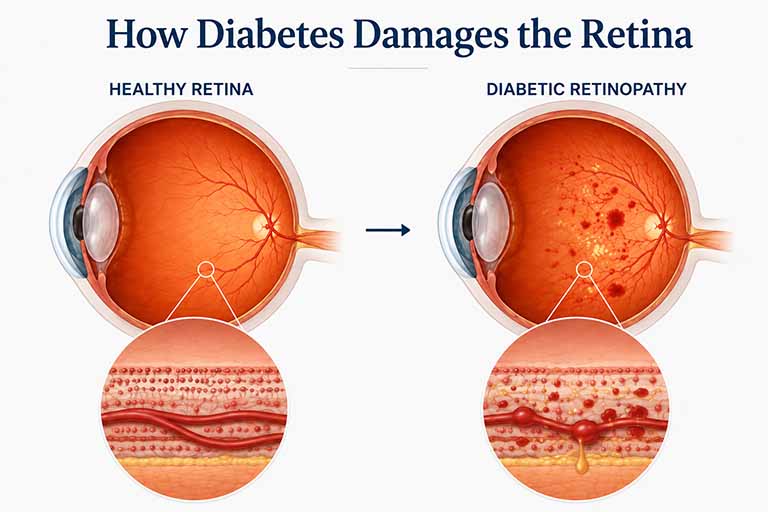
How Diabetes Damages the Retina
High blood sugar can damage the tiny blood vessels that nourish the retina.
Over time, these blood vessels may:
- Leak fluid or blood
- Become blocked
- Cause swelling in the retina
- (macular edema)
- Trigger the growth of abnormal new blood vessels
Without appropriate monitoring and treatment, these changes can lead to permanent vision loss.
(Educational Illustration: “How Diabetes Damages the Retina”)
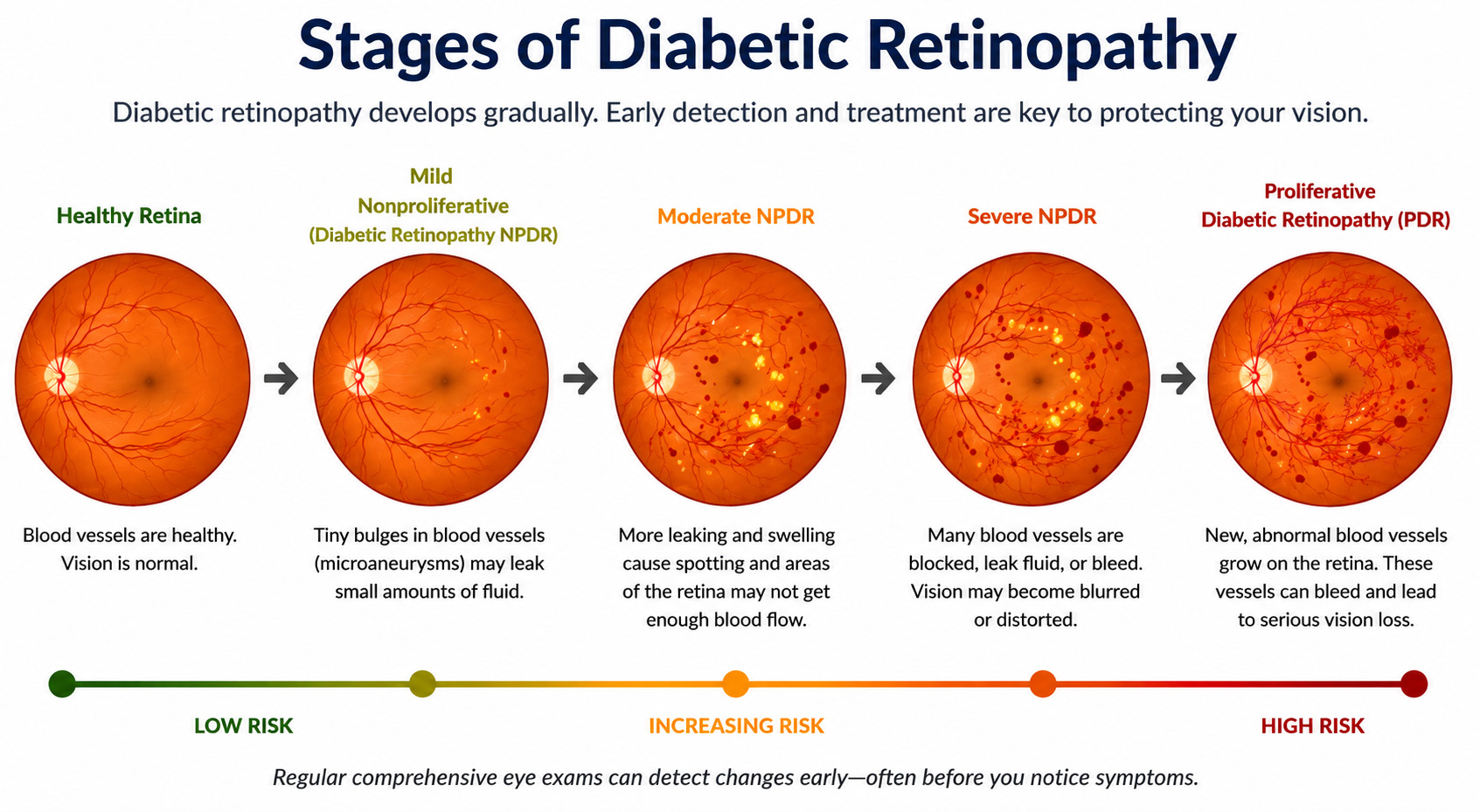
Stages of Diabetic Retinopathy
Diabetic retinopathy usually develops gradually over time.
Healthy Retina → Mild NPDR → Moderate NPDR → Severe NPDR → Proliferative Diabetic Retinopathy (PDR)
Early stages often have no symptoms, while advanced stages can threaten vision if left untreated.
(Educational Illustration: “Stages of Diabetic Retinopathy”)
Your Diabetic Eye Examination
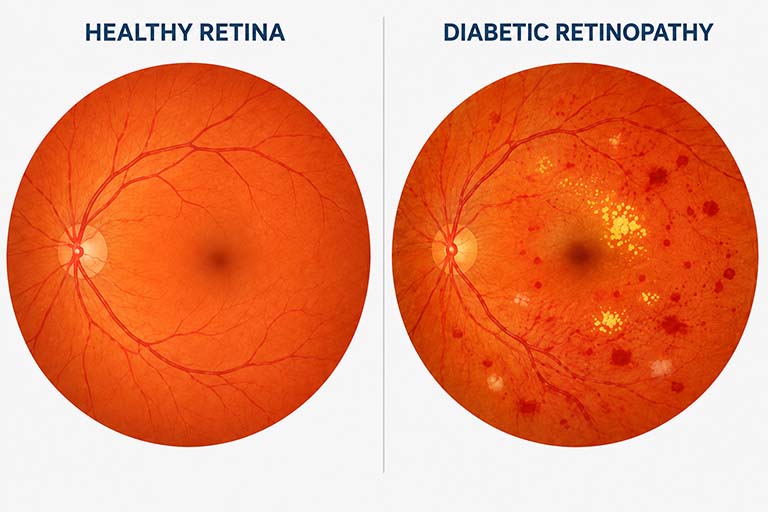
A comprehensive diabetic eye evaluation allows us to detect retinal changes before they affect your vision.
Your examination may include:
- Comprehensive eye examination
- Dilated retinal examination
- Advanced retinal imaging
- Macular evaluation
- Intraocular pressure measurement
- Personalized discussion of your eye health
Retinal imaging helps document and monitor changes over time as part of your ongoing eye care.
Treatment Options
Not every stage of diabetic eye disease requires treatment. Early changes are often monitored closely, while more advanced disease may benefit from treatment to help preserve vision.
Your personalized treatment plan may include:
Careful Monitoring
Regular eye examinations allow us to monitor for progression and recommend treatment when needed.
Intravitreal Injections
Medications injected into the eye can help reduce retinal swelling and slow disease progression.
Laser Treatment
Laser therapy may be recommended for certain stages of diabetic retinopathy.
Referral to a Retina Specialist
Patients with advanced diabetic retinopathy may be referred to a retinal specialist for additional treatment, including surgery when appropriate.
Protecting Your Vision
While diabetic eye disease cannot always be prevented, healthy habits can significantly reduce your risk of vision loss.
- Keep your blood sugar under good control.
- Manage your blood pressure and cholesterol.
- Take medications as prescribed.
- Don’t smoke.
- Keep your scheduled diabetic eye examinations.
Frequently Asked Questions
Can diabetic eye disease develop without symptoms?
Yes. Many people have no noticeable vision changes during the early stages, which is why regular eye exams are so important.
How often should I have a diabetic eye exam?
Most people with diabetes should have a comprehensive dilated eye examination at least once a year. Your ophthalmologist may recommend more frequent visits based on your eye health.
Can diabetic eye disease be treated?
Yes. Depending on the stage of the disease, treatment may include monitoring, injections, laser treatment, or referral to a retinal specialist when needed.
Can good diabetes control help protect my vision?
Yes. Maintaining healthy blood sugar, blood pressure, and cholesterol levels can significantly reduce the risk of diabetic eye complications.
Meet Your Physician
Experienced Care for Eye Disease
Dr. Joseph Ceravolo provides comprehensive eye care for patients with diabetes, glaucoma, cataracts, and thyroid eye disease, with a focus on early detection, personalized treatment, and long-term vision preservation. By identifying eye conditions before they significantly affect vision, he helps patients protect their eyesight and maintain healthy vision through every stage of life.
Our Blog
Latest News
Stay informed with the latest news, eye care advice, treatment innovations, and aesthetic solutions from our experienced team.

Laser Treatment for Redness and Rosacea in Columbus, GA
Persistent redness and rosacea can be frustrating and difficult to manage with skincare alone. Laser technology offers a targeted solution. How Alma Harmony Helps Specific Harmony handpieces target visible blood vessels and redness, helping reduce flushing and improve…

Treating Sun Damage and Brown Spots with Alma Harmony IPL
Sun exposure is one of the leading causes of premature skin aging. Over time, UV exposure can lead to brown spots, sunspots, and uneven skin tone. Alma Harmony IPL treatments offer an effective solution. What Is IPL? IPL (Intense Pulsed Light) uses broad-spectrum…

ClearLift® Laser Treatment: The “Lunchtime Facelift” in Columbus, GA
For patients looking to improve skin tone, texture, and firmness without downtime, ClearLift® laser treatment is one of the most popular options available today. Offered through the Alma Harmony platform, ClearLift delivers powerful results while allowing you to…